Your phone lights up at 10:47 pm. A new Instagram DM asks, “Hey, do you have anything Sunday?” At 11:12 pm, someone replies to a Story asking for a balayage price. The next morning, a voicemail comes in while you're mid-client, then a WhatsApp message follows asking to move an appointment by half an hour.
That's how a lot of salons run before they sort out online booking. It feels busy, but it's messy busy. You spend time chasing details, repeating prices, checking diaries, and patching holes caused by late replies. Clients feel that friction too. If booking with you depends on catching you at the right moment, some of them won't wait.
When a hair salon books online properly, the gain isn't just convenience. It's control. The best systems don't only take appointments. They shape the whole client journey, from discovery and first booking through to reminders, policies, reviews, and rebooking.
Table of Contents
Moving Beyond DMs and Phone Tag
The biggest problem with DM booking isn't that it looks informal. It's that it forces every enquiry through you personally. That means every booking depends on your availability to answer, your memory of the diary, and your ability to catch conflicts before they become awkward.
Clients have moved on from that model. Industry data compiled in these hair salon booking statistics reports that 40% of salon appointments are booked outside business hours, and another dataset found 52% of bookings happen between 5 PM and 9 AM. The same source says 94% of people would choose a new provider if that provider offered online booking. That's why a digital booking setup isn't a nice extra anymore. It's part of how clients decide where to go.
A lot of stylists first look into software because they want fewer admin messages. That's a good start, but it's too small a goal. You're not only reducing interruptions. You're making it possible for someone to go from “I need my hair done” to confirmed appointment without waiting for a reply. If you want a practical sense of what that shift looks like, this guide to appointment booking software for service businesses is a useful reference point.
Practical rule: If a client has to ask whether you're free, your system is still doing too much work manually.
There's also a hidden cost in phone and message bookings. Every manual conversation creates room for error. A trim turns into a restyle. A colour enquiry gets booked into a slot that isn't long enough. Someone thinks they booked with a specific stylist, but nobody confirmed it.
Here's what tends to work better:
Live availability: Clients see real slots instead of sending “any spaces this week?” messages.
Instant confirmation: They know the appointment is real, not pending.
Automated reminders: You don't have to remember to chase people manually.
Clear service selection: Clients book the right thing, or at least a much closer version of it.
The shift feels uncomfortable at first, especially if you've always run things from a paper diary or your inbox. But once your calendar stops depending on your thumbs, your day gets quieter in the right way. Fewer interruptions. Fewer misunderstandings. Better bookings.
Laying the Foundations for Flawless Booking
A booking system only feels frictionless to clients if the setup is tight behind the scenes. Most problems blamed on “online booking” are really setup mistakes. Services are named badly. Appointment lengths are wrong. Time off isn't blocked properly. The platform gets the blame, but the calendar rules caused the friction.
Industry guidance in this salon digitisation article is clear on the essentials. Live availability, automatic conflict checks, easy time-off blocking, automated confirmations, and reminders should be configured from the start. That foundation is what replaces manual scheduling without replacing it with chaos.
For salons comparing options, it helps to look at platforms built specifically for hair salons and independent stylists, rather than trying to force a generic calendar tool into salon workflow.
Start with the calendar rules
Think like an operator first, not like a marketer. Before you care about colours, photos, or button placement, make sure your calendar can't betray you.
A solid setup usually includes:
Real appointment durations
Don't shorten services to make the diary look fuller. If a full head colour takes the time it takes, enter it accurately.Blocked-out personal time
Lunch, school runs, stock collection, consultation windows, and training time should all be treated as real diary events.Conflict prevention
If you can't physically perform two services at once, the system should never allow it.Reminder timing
Confirmations should go out instantly. Reminder timing should give clients enough notice to attend, reschedule, or cancel within your policy.
When stylists move from pen and paper, the hardest part is often trust. They don't yet believe the calendar will hold. The fix isn't reassurance. It's good setup and a short testing period.
Before going live, make a series of test bookings on different devices. Book a simple cut, a longer colour service, and an appointment that should fail because the time is blocked.
Build services like a client sees them
The service menu should make sense to a client who doesn't speak salon shorthand. If your list reads like internal terminology, clients will guess. Guessing creates wrong bookings.
Use service names that answer the client's question quickly. Keep prices visible. Add short descriptions where confusion is common, especially for colour work, specialist appointments, and add-ons.
Good service setup usually looks like this:
| Service setup choice | What works | What doesn't |
|---|---|---|
| Naming | “Cut and blow dry” | “Ladies package 1” |
| Timing | Accurate duration for the real appointment | Best-case timing that causes overruns |
| Price display | Transparent and upfront | “From” pricing everywhere with no context |
| Add-ons | Clear extras like toner or treatment | Hiding extras in notes or DMs |
Later in the setup process, it helps to watch a live example of how a clean booking journey should feel:
The transition period is where most salons wobble. For a week or two, you may still manually tidy up old habits. Clients might send a message instead of clicking the link. Some regulars will need nudging. That's normal. What matters is that the system becomes the default, not the backup.
Designing a Booking Page That Converts
A functional booking page isn't automatically a persuasive one. Plenty of salons technically offer online booking, but the page still leaks appointments because it feels confusing, unfinished, or untrustworthy.
The biggest improvement I've seen from a simple change is giving the salon proper control over the booking flow clients see. That means deciding what appears first, what gets explained, how many choices appear at once, and where the booking button sits. Adding clear “Book Online” buttons usually lifts activity almost immediately because it removes the need to hunt for the next step.
Reduce choice without reducing clarity
Clients don't need every possible detail at the first click. They need enough structure to feel confident they're in the right place.
Start with a clean service list, then let the booking journey reveal the next relevant choices. If the first screen is crowded with every service variation, every stylist, every policy, and every add-on, people hesitate. Some leave.
A stronger flow usually includes:
A visible main action: “Book Online” should be obvious on mobile and desktop.
Bottom-of-screen placement: Booking widgets and buttons often perform best lower on the screen, where attention settles when someone is ready to act.
Short decision paths: Fewer clicks between service selection and available time slots.
Helpful descriptions: Enough detail to stop uncertainty, not enough to create reading fatigue.
A booking page should answer three questions fast. What can I book, how much is it, and when can I come in?
Trust signals matter before price does
Booking pages convert better when they look maintained. That means recent imagery, accurate hours, consistent branding, and reviews that don't feel stale.
According to these salon client experience statistics, 44% of clients prefer to book appointments online, and online booking ranks as the third most important factor in a good beauty-service experience. The same source reports that 83% of hair clients and 84% of wellness clients won't book if the business has negative online reviews. Your booking page and your reputation aren't separate assets. They support each other.
A quick audit helps. Ask:
Do your service photos match your current standard of work?
Are your prices current, or are clients still being told to DM for a quote?
Do reviews appear close enough to the booking decision to reduce doubt?
Does the page work smoothly on a phone?
Most salon traffic now arrives from mobile behaviour, social links, and fast intent. If your page forces too much scrolling, too much reading, or too much uncertainty, it loses the moment. A hair salon books online best when the booking path feels obvious, professional, and immediate.
Securing Your Revenue with Smart Policies
No-shows and late cancellations aren't just diary annoyances. They create dead time that can't always be resold, especially for long colour appointments, specialist work, or weekend slots.
That's why booking policies should be treated as part of pricing strategy, not as an awkward bit of admin hidden in small print. When the policy is built into the booking flow, clients see it before they commit, and the system handles the enforcement consistently.
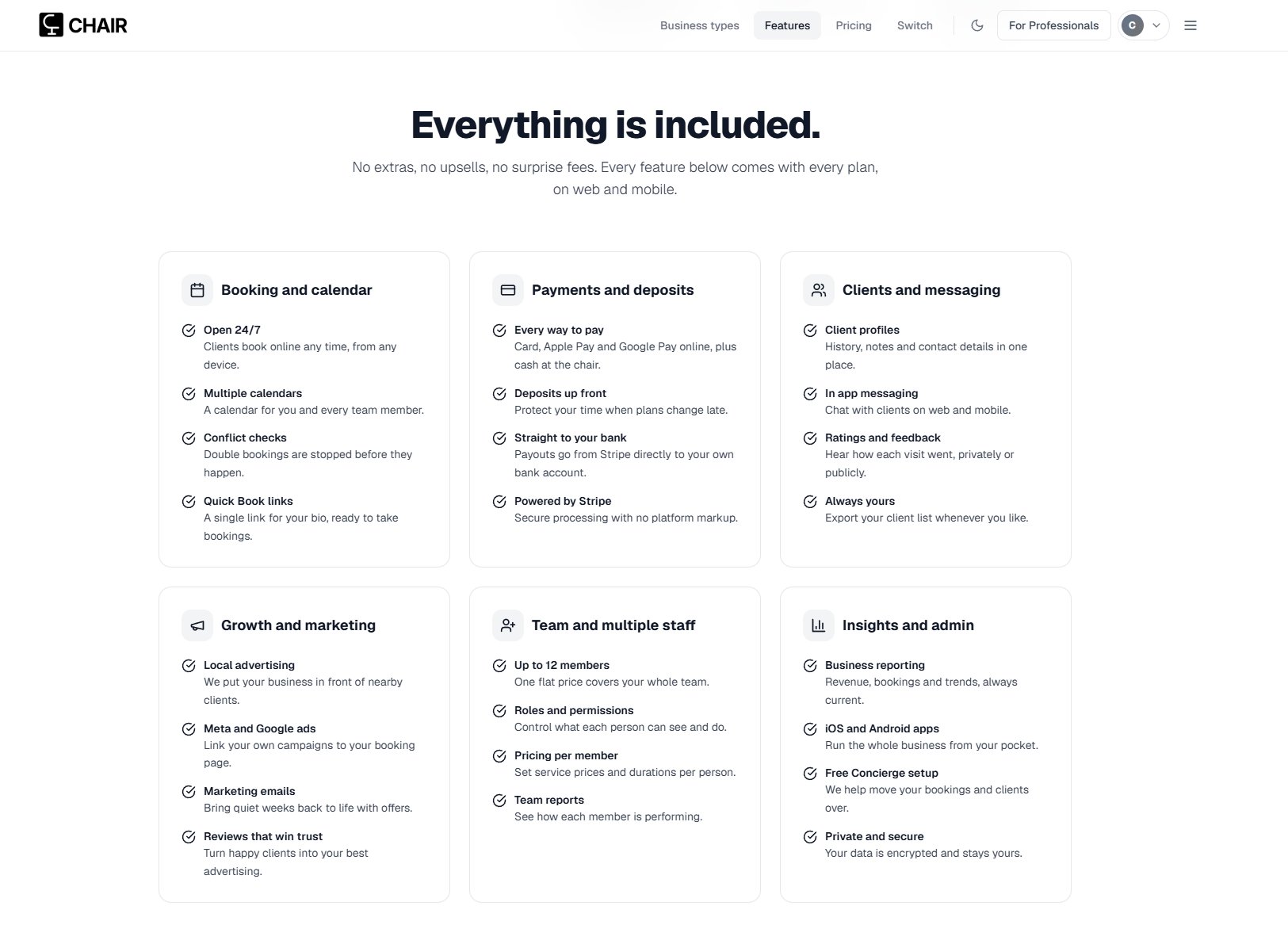
If you're setting this up for the first time, it helps to review how a booking system with payment protection structures deposits, card capture, and cancellation windows inside the appointment flow.
Different services need different protection
Not every appointment carries the same risk. A quick fringe trim and a long corrective colour shouldn't share identical policy settings.
Here's a more practical way to view it:
| Service type | Policy approach | Reason |
|---|---|---|
| Short, lower-risk appointments | Lighter friction | Easier booking encourages uptake |
| Long colour sessions | Stronger deposit or card protection | More time blocked, higher loss if cancelled |
| Peak-time bookings | Firmer cancellation window | Prime slots are harder to refill |
| New-client specialist services | Clear commitment upfront | Reduces uncertainty and filters serious enquiries |
That kind of structure feels fairer to clients because it matches the value and complexity of the appointment. It also feels easier to enforce because it isn't arbitrary.
A policy only works when it's visible early. Don't bury it in a confirmation email after the client has already booked. Put it where the client makes the decision.
Deposits also position expertise
There's another reason to use deposits well. They signal value. That matters even more if you offer specialist work.
Discussion highlighted in this post about underserved salon specialisms states that curly hair is often cited as the most underserved niche in the salon industry. When you position yourself as a specialist, a deposit doesn't only protect your time. It tells clients that this isn't a casual, interchangeable service.
Serious clients rarely object to clear policies when the experience around them feels professional.
That's particularly true for consultation-led bookings, transformation work, and niche expertise that takes training and preparation. A weak policy attracts indecision. A sensible one attracts commitment.
What doesn't work is swinging too far the other way. If every service has maximum friction, clients feel policed before they feel welcomed. The best setup is balanced. Protect the appointments that need protection. Keep lower-risk bookings easy. Make the rules visible, consistent, and calm.
Attracting New Clients to Your Booking Page
A strong booking page won't fill itself. It needs traffic with intent behind it. The simplest mistake salons make is building a booking setup and then treating the link like it's enough on its own.
It isn't. The booking page has to be fed from the places clients already use to discover salons, compare options, and decide whether to act now or later.
Meet clients where they already search
A lot of salon marketing still revolves around service names only. Cut. Colour. Balayage. Extensions. That matters, but it misses a common type of booking intent. People often search around timing.
Keyword guidance in this salon SEO article on hair salon keywords highlights phrases like “hair salon open Sunday near me” as an underserved niche. That's a useful reminder that some clients aren't just looking for a treatment. They're looking for an appointment window that fits their life.
That changes how you market availability. Instead of posting only “colour appointments available”, use language tied to timing and urgency:
Sunday slots: Mention them clearly if you offer them.
Late evening appointments: Call them out in social captions and profile text.
Last-minute gaps: Share them with direct booking links, not “message to book”.
Local intent: Pair timing with area names so people know you're relevant to them.
Turn social traffic into booking traffic
The easiest win is usually reducing the distance between discovery and booking. If someone sees your work on Instagram or gets your number on WhatsApp, they shouldn't need a separate conversation just to secure a slot.
A tighter acquisition path often looks like this:
A client discovers your work through a local listing, social post, referral, or marketplace profile.
They click a quick booking link directly from bio, profile, or message shortcut.
They land on a page that shows services, pricing, and live availability.
They confirm without waiting for you to reply.
They receive reminders and are prompted to rebook later.
The best marketing message in the world still fails if the next step is “DM me for availability”.
Often, salons underuse their channels. Your Instagram bio should point to booking. Your WhatsApp profile should point to booking. Story highlights, pinned posts, and local ad traffic should all point to booking.
A hair salon books online more consistently when every discovery channel leads to the same clear endpoint. Not a phone number. Not a vague enquiry form. A proper booking path.
Using Data to Refine and Grow Your Business
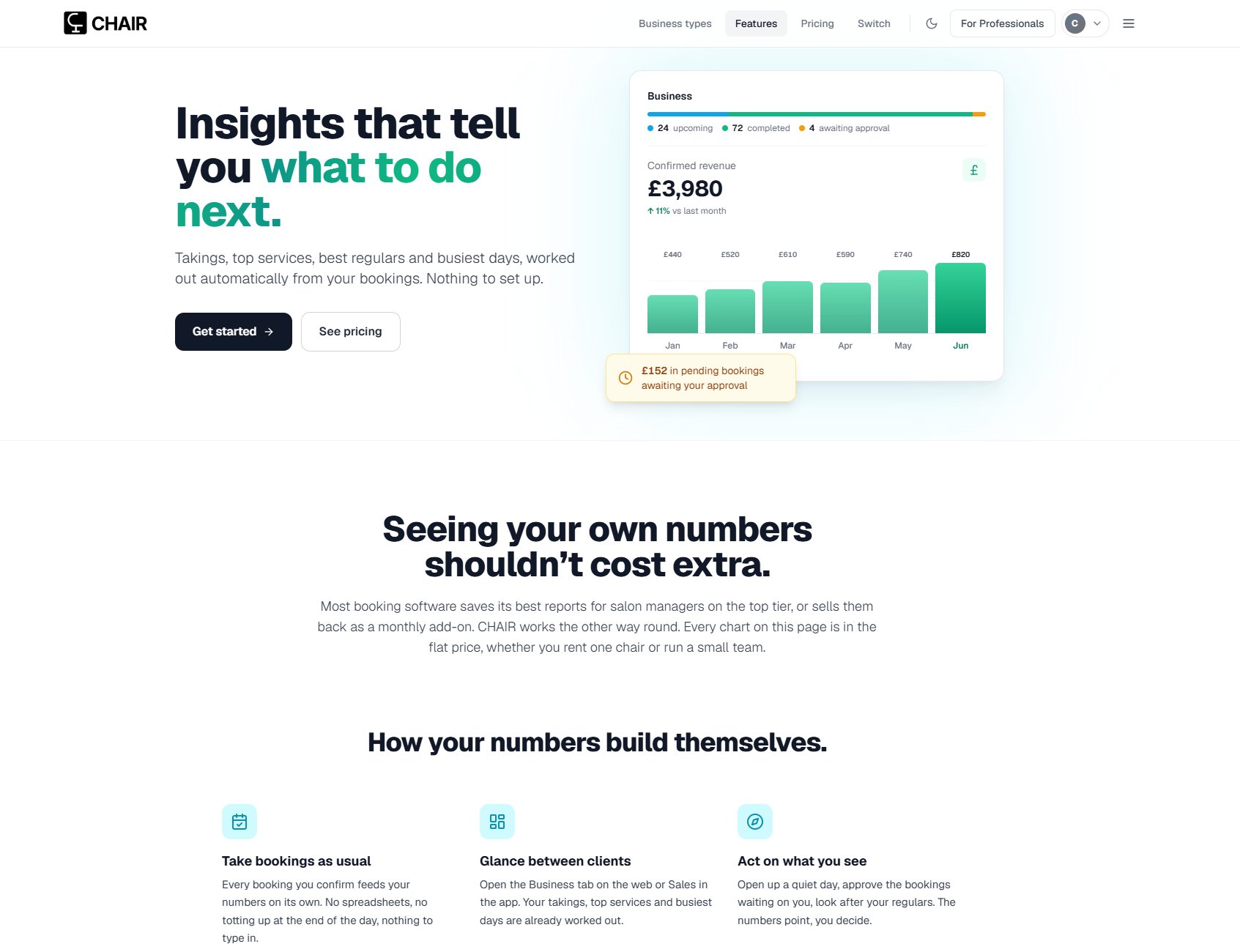
Once bookings run through one system, you stop guessing. You can see what people book, when they book it, what they return for, and which services waste time or margin.
That's the difference between being digitally available and being operationally informed. The booking system becomes a record of demand, not just a place where appointments sit.
Review the right signals
Industry commentary in this article on salon technology and growth reports that data-driven client matching and personalisation can increase retention by 30–50%, and it recommends quarterly reviews of booking data to identify top and bottom performing services.
That review doesn't need to be complicated. Look at patterns such as:
Which services rebook well
Which appointment lengths regularly overrun
Which days or times stay underused
Which clients come back consistently
Which services attract new clients but not repeat visits
A lot of salons stare at gross revenue and stop there. That misses the operational story underneath.
Use insight to improve retention
The best changes usually come from small adjustments made regularly. Rename confusing services. Remove weak ones. Bundle treatments that clients already pair together. Tighten durations that are unrealistic, or expand them if they repeatedly create pressure.
Collecting reviews should sit inside that routine too. Reviews don't only help discovery. They also show whether the client experience matches what your booking page promises.
If you review your data every quarter, you'll spot trends before they become habits. That gives you room to improve retention, sharpen your service menu, and build a calmer schedule with better-fit clients.
A hair salon books online more profitably when the system is used as a decision tool, not just a diary.
CHAIR gives UK hair professionals a practical way to run that full journey in one place, from online booking and deposits to reminders, reviews, messaging, and rebooking. If you want a booking setup that replaces DMs and paper diaries without taking commission on every appointment, take a look at CHAIR.