You're probably still doing at least part of your booking through Instagram DMs, missed calls, WhatsApp messages, and that one client who always says “Can you fit me in today?” while you're halfway through a skin fade. That system works right up until it doesn't. You miss a message, two people think they've got the same slot, or someone ghosts a peak-time appointment and your afternoon income takes a hit.
That's usually the point where a barber stops seeing a barber app as a nice extra and starts seeing it as basic shop infrastructure. The change isn't about being more “techy”. It's about getting your time back, protecting your diary, and making it easier for decent clients to book without chasing you.
Table of Contents
- Beyond DMs and Phone Calls
- What a Modern Barber App Actually Is
- The Three Deal-Breaker Features You Need
- How to Choose the Right App for Your Business
- Your 5-Step Setup and Launch Plan
- Real-World Scenarios and Barber FAQs
Beyond DMs and Phone Calls
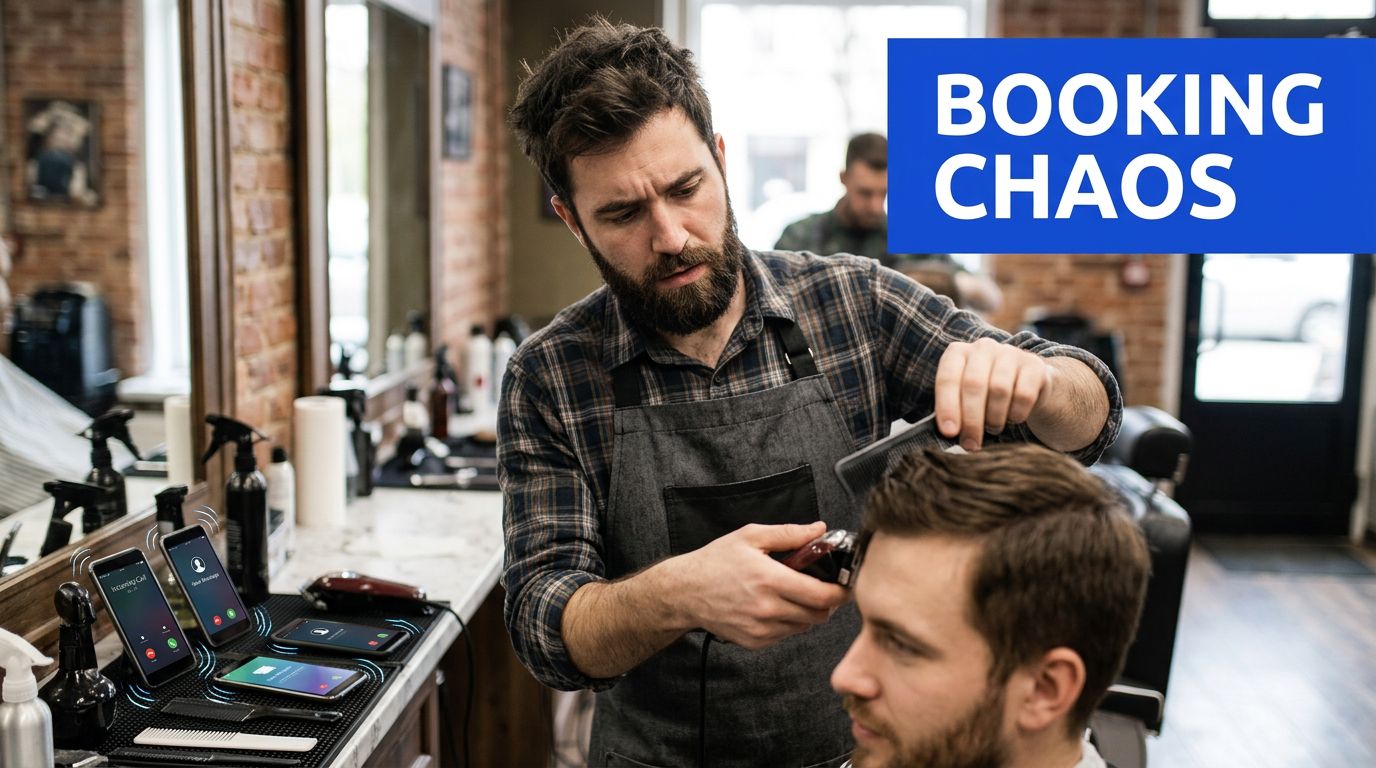
A lot of barbers don't realise how much admin they're carrying until they stop doing it manually. One message comes through on Instagram. Another arrives by text. Someone calls while you've got the trimmer in hand. A regular walks in expecting a chair because “you looked quiet online”. None of that feels like business growth. It feels like interruption.
The old way creates hidden work
The problem with DMs and phone calls isn't only inconvenience. It's that the whole booking system lives in your head. You're remembering who asked first, who wanted “around 3-ish”, who said they might bring their son, and who still hasn't confirmed. That's admin stacked on top of cutting.
Clients feel it too. They want to see availability, choose a service, book the right slot, and get on with their day. They don't want to send three messages just to ask if you're free on Thursday.
Practical rule: If booking you feels harder than booking a taxi or ordering food, some clients will quietly book somewhere else.
That shift has already happened at industry level. By 2026, digital scheduling tools are projected to be the dominant method for barbershop appointments, with about 77% to 77.49% of bookings made online via apps, and standalone barber booking apps holding a 51.8% share of the platform type market in 2024, according to barber booking app market data.
A barber app makes the business feel organised
The upgrade is simple. A proper barber app gives clients one place to book and gives you one place to manage the day. No digging through message threads. No repeating prices. No answering “what times have you got?” while lining up a beard.
If you want a broader look at how self-service booking changes day-to-day admin, this guide on online booking for hair salons covers the shift well. The same logic applies behind the chair in barbering.
A good app also changes how your business looks from the outside:
- More professional first impression because services, prices, and availability are clear
- Less friction for new clients because they can book without waiting for a reply
- Fewer interruptions during appointments because the app handles the basic questions
- Better boundaries because you don't need to be “on call” all evening
It's not about replacing the barbershop vibe
Some barbers worry that moving to an app makes the business colder. In practice, the opposite usually happens. Less booking chaos means you've got more headspace for the actual client experience. You can talk, cut, advise, upsell properly, and stay on time.
The vibe doesn't come from disorganisation. It comes from good service, good work, and a shop that runs properly.
What a Modern Barber App Actually Is
Some barbers hear “barber app” and think it means a calendar with a booking button. That's too narrow. A modern barber app is closer to a digital front desk that also handles bits of your admin, customer service, and daily business management.
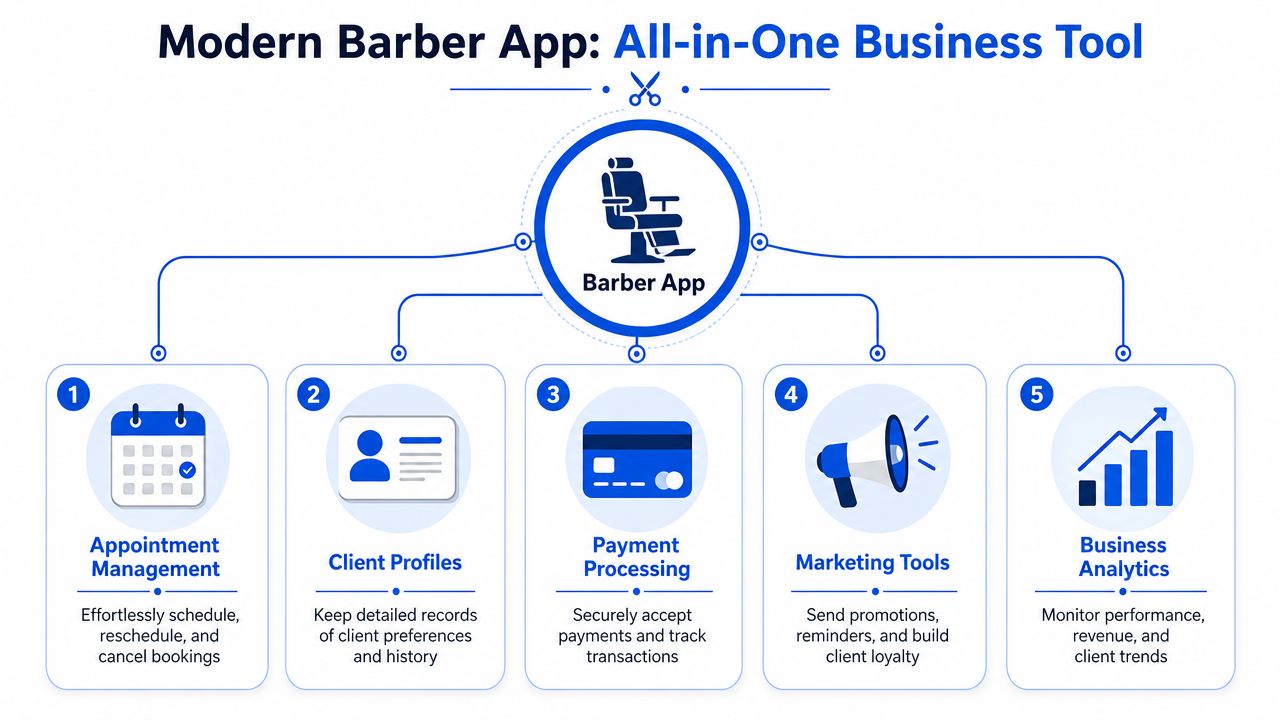
It starts with booking, but it shouldn't stop there
At minimum, clients should be able to see your services, prices, and live availability. They should be able to choose the right slot without messaging you to ask how long a cut takes or whether you've got room after work.
That booking layer matters, but on its own it's not enough. Plenty of tools can show a calendar. What separates a useful barber app from a basic one is everything attached to that booking.
The three parts that matter in practice
Think of it as one tool doing three jobs.
| Function | What it does day to day | Why it matters |
|---|---|---|
| Booking engine | Takes appointments, shows availability, manages confirmations | Cuts back-and-forth and keeps the diary cleaner |
| Client management | Stores visit history, service notes, preferences, and messages | Helps you personalise service without relying on memory |
| Business operations | Handles payments, reminders, policies, and performance tracking | Protects income and reduces manual admin |
A lot of barbers only notice the second and third parts after switching. Once client notes live in one place, you stop guessing what guard they had last time or whether they prefer extra time on the beard. Once payments and reminders are tied into the same system, the whole week gets easier to control.
A barber app should take work off your plate. If it only gives you a prettier calendar, it's not doing enough.
It should work like a quiet staff member
The best systems don't ask for constant babysitting. They sit in the background and do the repetitive jobs properly. They send confirmations. They keep records tidy. They let clients book late at night without dragging you into a conversation.
In-app messaging is part of that. One of the most useful everyday examples is when a client wants to know if there's any chance of an earlier slot or same-day availability. Instead of walking in and expecting a chair, they can send a quick message to the pro through the app and get a clean answer.
That's a small feature on paper. In real life, it saves awkward conversations, wasted trips, and unnecessary calls.
Setup shouldn't feel like a project
Barbers often overthink this aspect. Services, prices, and a gallery don't need to become a weekend admin job. On modern platforms, it takes minutes. The surprise for many people is how easy that part is once everything is in one place.
If a platform feels clunky before you're even live, that usually tells you what the rest of the experience will be like.
The Three Deal-Breaker Features You Need
Most booking tools advertise the same long list of features. Don't get distracted. Three things matter more than the rest if you want a barber app that protects revenue and lowers stress. Those three deal-breakers are no-show protection, smart calendars, and marketing systems.
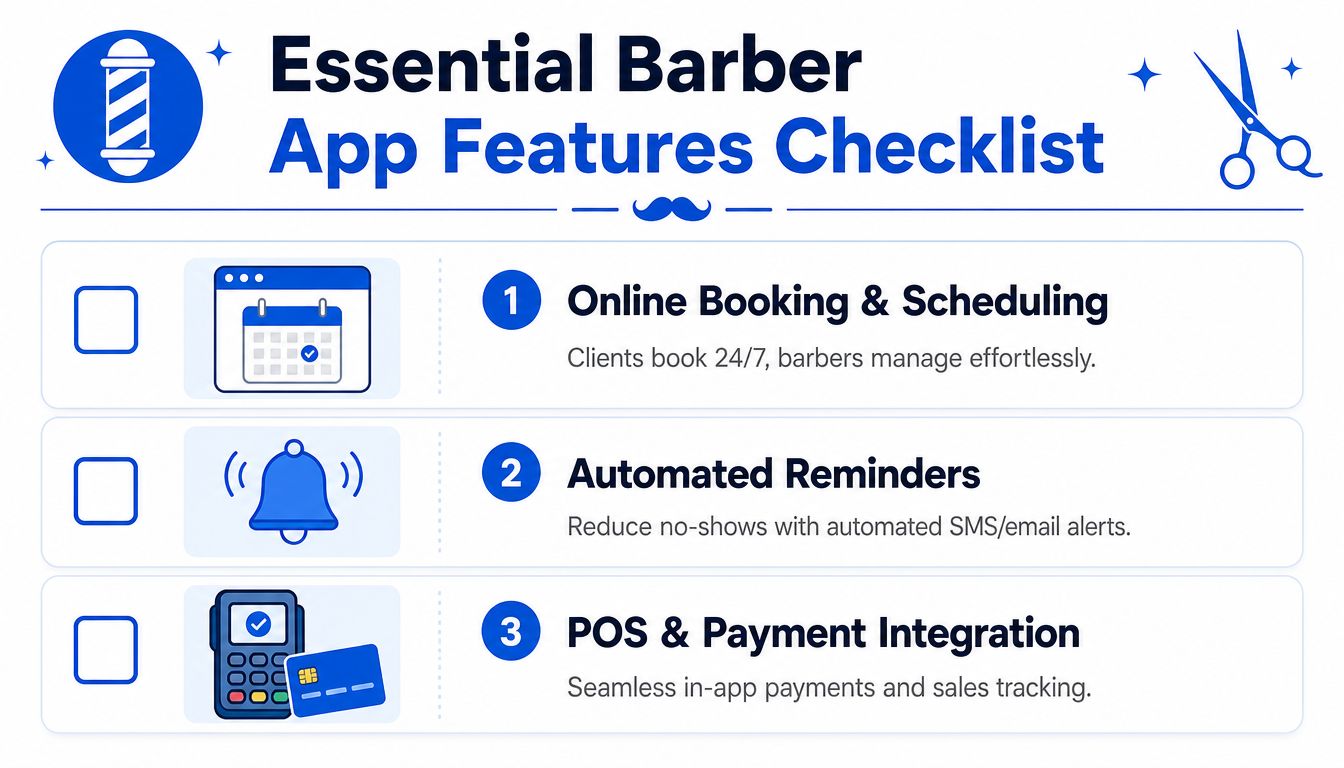
No-show protection
This is non-negotiable. A barber can handle a lot, but dead time in the diary is hard to recover once the hour has gone. Deposits, card capture, cancellation rules, and automated reminders turn a soft booking into a real booking.
The money side is already clear in the market. Shops using automated reminder and deposit tools protected an average of $4,300 or more per month in 2025 against no-shows and late cancellations, based on barbershop statistics on reminders and deposits.
If you're comparing platforms, check whether you can set payment rules around the appointment itself. This breakdown of a booking system with payment is worth reading because that's where a lot of barber businesses either protect their time or leave money on the table.
Here's the practical test. If someone can book your busiest slot with zero commitment, the app is helping the client more than it's helping you.
After that, look at how the feature works in the flow of the day.
Smart calendars
A smart calendar isn't just a diary on a screen. It should stop mistakes before they become problems. One of the best examples is booking hold timers for customers. While a client is in the process of booking, the slot is temporarily held so another person can't jump in and grab the same time.
That sounds small until you've had two people believe they both secured 4 pm on a Friday.
A proper smart calendar should also handle real-world barbering logic:
- Service timing so a cut and beard doesn't sit in a slot meant for a quick tidy-up
- Conflict checks so overlapping bookings don't slip through
- Time off management so your availability reflects reality
- Team visibility if you've got more than one chair to coordinate
Marketing systems
A lot of barbers say they want “more clients” when what they really need is better follow-up. Marketing inside a barber app isn't about spam. It's about bringing back the people who already liked your work but got busy, forgot, or drifted.
The cheapest client to win back is usually the one who already trusts your hands.
Useful marketing tools include reminders to rebook, direct links from social channels, and clean ways to stay visible without spending your day posting and replying. If an app can't help you fill gaps and re-engage old clients, you'll still end up doing too much manually.
Those three features don't just make life easier. They decide whether the app becomes part of your business or another monthly cost that doesn't pull its weight.
How to Choose the Right App for Your Business
Once you know your deal-breakers, the next mistake is choosing on looks alone. Plenty of platforms have slick screenshots and weak business terms. Before signing up, check how the app handles money, ownership, support, and the way you work.
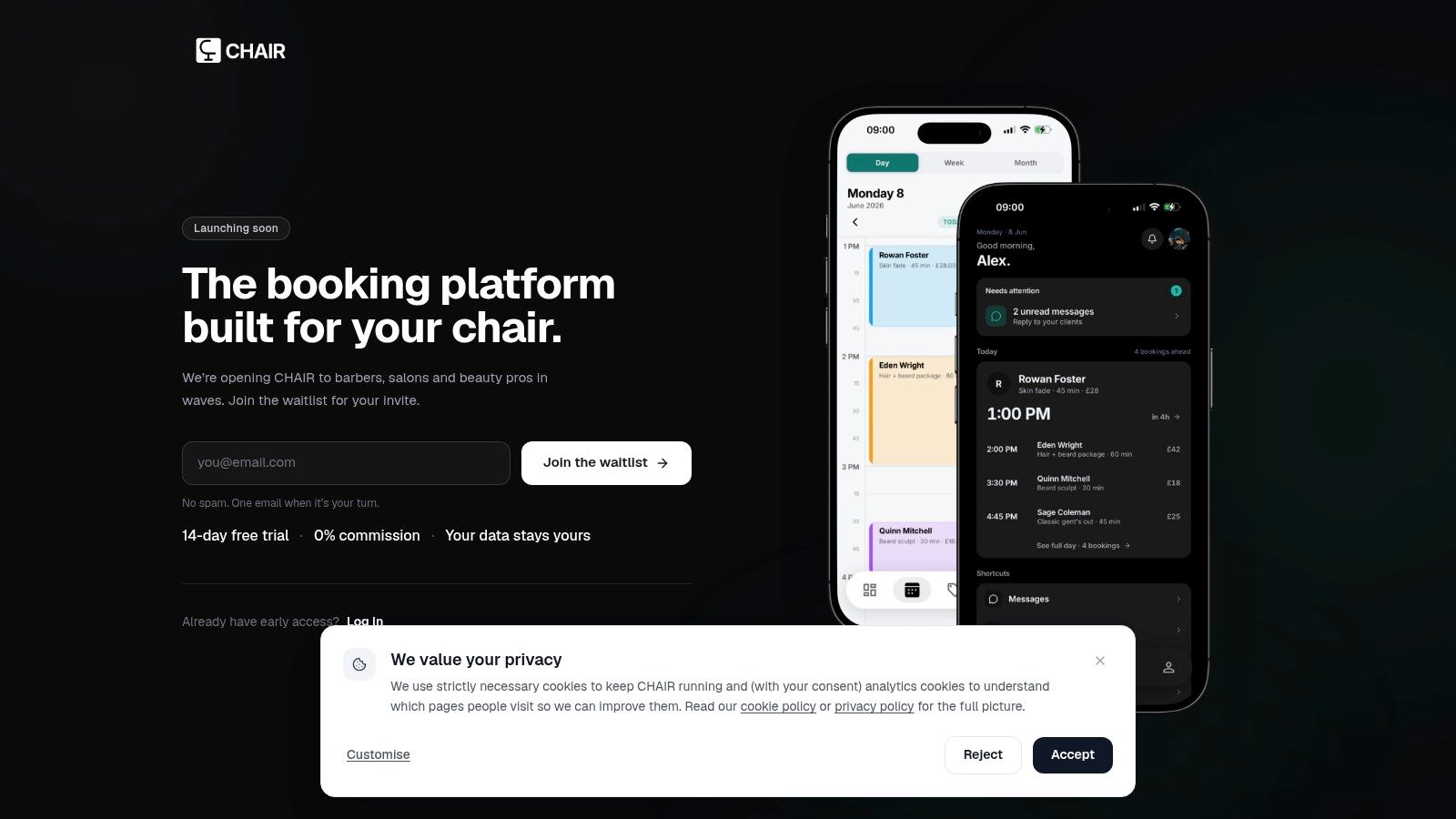
Ask the questions that affect your money
Payment setup matters more than most barbers expect. If a platform delays access to your earnings, takes a cut per booking, or buries charges in the fine print, that cost adds up fast. The cleaner model is direct payout to your own account with transparent processing.
There's still a big gap here in the UK. Only 12% of UK barbershops currently use integrated payment systems that enable real-time earnings, while 78% still rely on cash or delayed transfers, according to UK barbershop payment adoption data.
Use that as a reminder to ask direct questions before you commit:
- How do payouts work and who controls the money flow?
- Is pricing flat or commission-based on every booking?
- Can you export your client data if you ever leave?
- Are payment costs transparent or do extra fees appear later?
Solo barber versus shop team
What works for a lone operator may frustrate a multi-chair shop. A solo barber usually needs speed, easy setup, mobile control, and clean communication with clients. A team needs visibility across multiple calendars, permissions, and a shared view of what's happening in the shop.
Here's a quick way to compare needs:
| Business type | Priority | Common mistake |
|---|---|---|
| Solo barber | Fast setup, mobile management, simple policies | Choosing a system built for larger salons |
| Small team | Shared calendars, role control, conflict prevention | Running multiple diaries with no central logic |
| Mobile barber | Location clarity, reliable deposits, strong messaging | Using a system that doesn't reflect travel and arrival reality |
If you're still narrowing options, this guide to appointment booking software for service businesses is useful for comparing what matters beyond the booking page.
Don't ignore support and client ownership
If the platform goes wrong on a busy Saturday, you need support that responds. If your shop grows, you need to know your client list belongs to you, not to the software.
That's the difference between renting a tool and building on someone else's land. Good software should help you run your business, not trap it.
Your 5-Step Setup and Launch Plan
A lot of barbers delay switching because they think setup will be long, fiddly, and annoying. In reality, it usually takes minutes to get the basics in place. The key is to keep it simple and launch fast, then tidy details as you go.
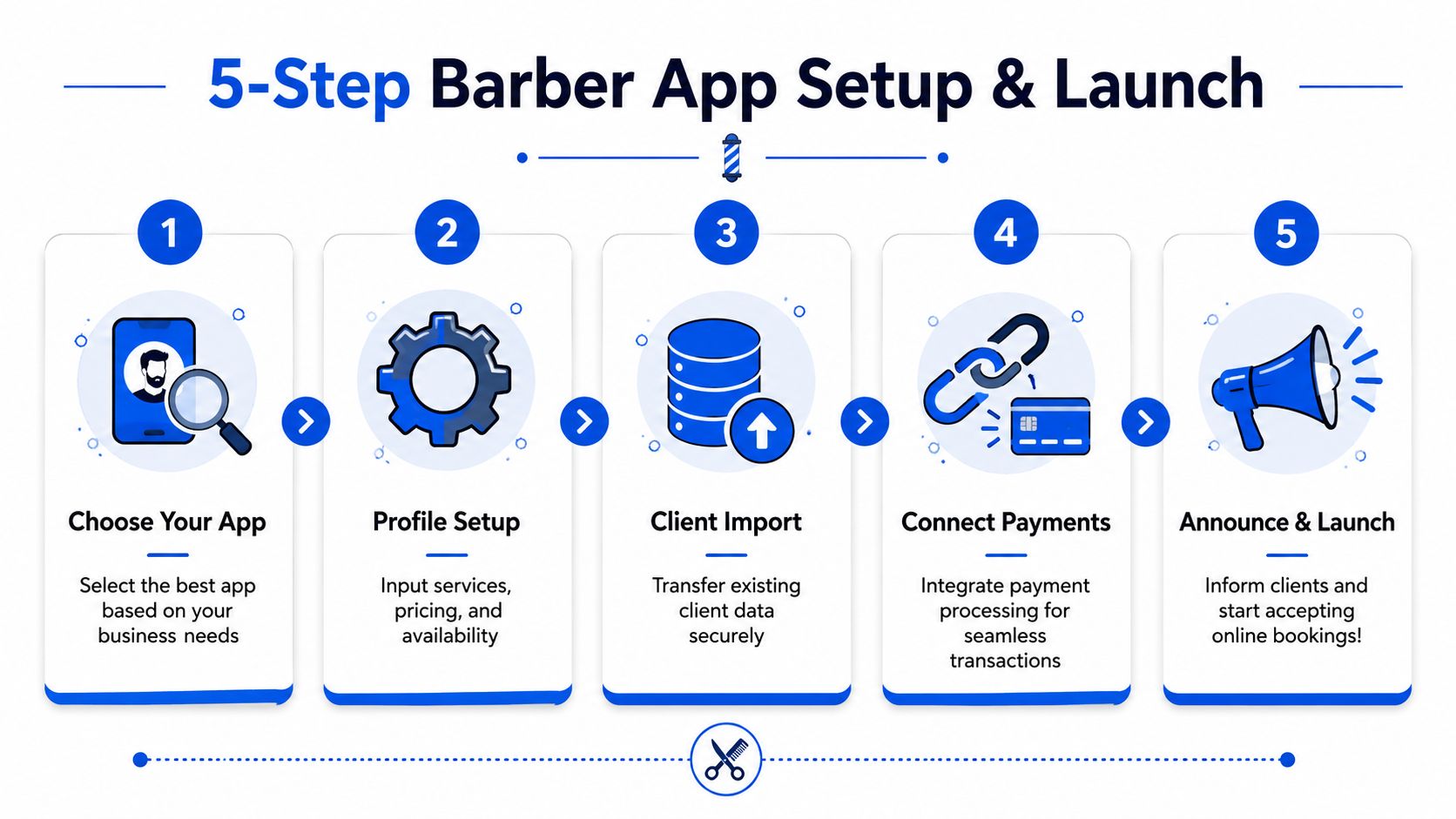
Step 1 to Step 3
Start with the things clients must understand immediately.
Set your services and prices
Keep names clear. “Haircut”, “Skin Fade”, “Haircut and Beard”, “Kids Cut”. Don't make people guess what's included. Add realistic timings from day one.Build your profile and gallery
Use clean photos of your work, your space, and your style. Don't overcomplicate it. A sharp profile photo, a few strong cuts, and accurate service info do the job.Add your booking policies
These policies protect your time. Turn on deposits where needed. Set cancellation windows. Decide how much flexibility you want and make it visible before clients book.
Key takeaway: The easiest launch is the one you don't keep postponing. Get the core details live first. You can refine wording and photos later.
Step 4 and Step 5
Once the booking page works, make it easy for clients to find it.
Push your Quick Book link everywhere
Put it in Instagram, WhatsApp, and your link-in-bio. That matters because apps using Quick Book links for Instagram and WhatsApp can generate local demand at no extra cost, and native mobile app use can drive a 20% increase in booking frequency by making the client journey simpler, according to UK barber app usage findings.Tell clients the process has changed
Post it on your story. Send it to regulars. Mention it during appointments. Keep the message plain: booking is now easier, faster, and available outside shop hours.
What to say to clients
Don't write a long announcement. Use direct language:
For regulars
“All bookings are now through my app. You can see live availability and lock in your slot anytime.”For social followers
“Booking link is live. No need to DM for times.”For walk-ins you can't fit
“Use the link and you'll see the next available space straight away.”
This change works best when you stop half-using the old system. If clients still think they can book in three different ways, you'll keep carrying the same admin with extra software on top.
Real-World Scenarios and Barber FAQs
The value of a barber app shows up in small moments, not just on a feature list. A client messages through the app asking if there's any chance of availability later. You reply quickly between appointments. They book the right slot instead of walking in and expecting magic. That's one less awkward conversation and one less interruption in the shop.
Another common one is the near double-booking that never happens because of a booking hold timer. A customer starts the checkout process, the slot is temporarily reserved, and someone else can't pinch it halfway through. That's the kind of thing you only notice when you've had the old mess before.
Daily situations where it earns its keep
These are the moments that tend to matter most:
Busy chair, ringing phone
The app answers the basic question for you because availability is already visible.Client wants to check before travelling
In-app messaging lets them ask if anything has opened up instead of turning up and hoping.Late cancellation leaves a gap
A proper system gives you a clean way to refill that time rather than scrambling through DMs.You're off the clock
Clients can still book without dragging you back into work mode late at night.
If the system reduces interruptions while you're cutting, it's doing its job.
Barber app FAQs
What if some of my clients aren't tech-savvy
Some won't switch overnight. That's normal. The easiest fix is to book their next appointment for them while they're in the chair, then show them how simple the process is for next time. Individuals adapt quickly when the process is clear.
Can a barber app actually bring in new customers
It can help, but not by magic. The best results come when the app makes you easy to discover, easy to book, and easy to rebook. If your booking link is buried, your profile is weak, or your pricing is vague, software won't fix that on its own.
Is a barber app suitable for mobile barbers
Yes, but this is where the details matter. The UK mobile barber conversation often skips over a major issue. 40% of customer complaints in cities like London are linked to mobile barbers failing to arrive, and location-verified booking apps with deposit enforcement can reduce these no-shows by up to 65%, according to reporting on mobile barber reliability in the UK.
For mobile work, the app needs to support clear scheduling, proper confirmation, and payment rules that stop unserious bookings. Otherwise, you're still relying too much on trust and text messages.
Do I need loads of time to set one up
No. For most barbers, services, prices, and a gallery can be added quickly. The bigger job is deciding your policies and then sticking to them.
If you're ready to stop juggling bookings through DMs and start running a cleaner, more profitable diary, CHAIR is worth a look. It gives UK barbers a proper booking page, smart calendar, payments, reminders, messaging, marketing tools, and a local marketplace in one place, with flat monthly pricing and no commission.