You're probably dealing with bookings in three places at once right now. Instagram DMs for new clients. WhatsApp for regulars. Missed calls while you're mid-fade. Then someone turns up saying, “I messaged last night,” and you're flicking between apps trying to work out whether that slot was free.
That setup works until it doesn't. It costs time during the working day, it creates awkward back-and-forth with clients, and it leaves too much room for double-bookings, forgotten appointments, and empty gaps you could have filled.
A proper barber booking app fixes that, but not every app fixes it in the same way. Some give you a clean online diary and direct payments. Some push marketplace discovery but take a cut as you grow. Some look cheap at the start and become expensive the moment your calendar gets busy. That pricing difference matters far more than most UK barbers realise.
Table of Contents
- Drowning in DMs? Why UK Barbers Are Switching to Booking Apps
- Core Features of a Barber Booking App Explained
- The Business Benefits of Automated Booking
- How to Choose the Right Barber Booking App
- Advanced Features for Scaling Your Barber Business
- Your Implementation and Migration Checklist
- Frequently Asked Questions from UK Barbers
Drowning in DMs? Why UK Barbers Are Switching to Booking Apps
A lot of barbers don't move to online booking because they love paper or enjoy chasing messages. They stay with the old setup because it's familiar. You know where your notebook is. You know which regular always wants Friday after work. You know that one client who books through Instagram every single time and never uses links.
The problem is that familiarity hides the cost. Every appointment confirmed manually interrupts cutting time. Every reschedule means another round of messages. Every “you free today?” enquiry forces you to stop, check the diary, reply, wait, and often repeat the whole process because the client changes the time.
That's still how a big chunk of the trade operates. As of 2026, approximately 60% of UK barbers still rely on paper diaries for scheduling, according to Setora's write-up on why UK barbers still use paper diaries. That tells you two things at once. First, the pain is widespread. Second, a barber who sorts this out early still gains an edge.
The day-to-day friction clients actually notice
Clients don't usually complain about your system directly. They feel it in slower replies, uncertainty, and booking friction.
- Late replies: Someone wants a trim for tomorrow. You don't answer until the shop quietens down, and by then they've booked elsewhere.
- Mixed channels: One booking comes through text, another through DM, another by phone. Keeping that tidy all week is harder than it sounds.
- Manual confirmation: If you're confirming each appointment yourself, you're acting as your own receptionist between cuts.
Most booking stress in a barbershop isn't the haircut. It's the admin wrapped around the haircut.
A barber booking app replaces that patchwork with one live system. Clients see available slots, book without waiting for a reply, and get confirmation straight away. You stop carrying the whole process in your head.
Why the switch sticks once it's made
The main reason barbers stay with online booking isn't that it looks modern. It's that it removes avoidable interruptions from the day. The shop feels more organised. Clients know where to book. You stop losing time to conversations that software can handle cleanly.
That doesn't mean the first week is effortless. You'll still need to set services properly, decide your cancellation rules, and nudge regulars away from old habits. But once the link is in your bio and the diary updates itself, the old method starts to feel like extra work you were accepting for no good reason.
Core Features of a Barber Booking App Explained
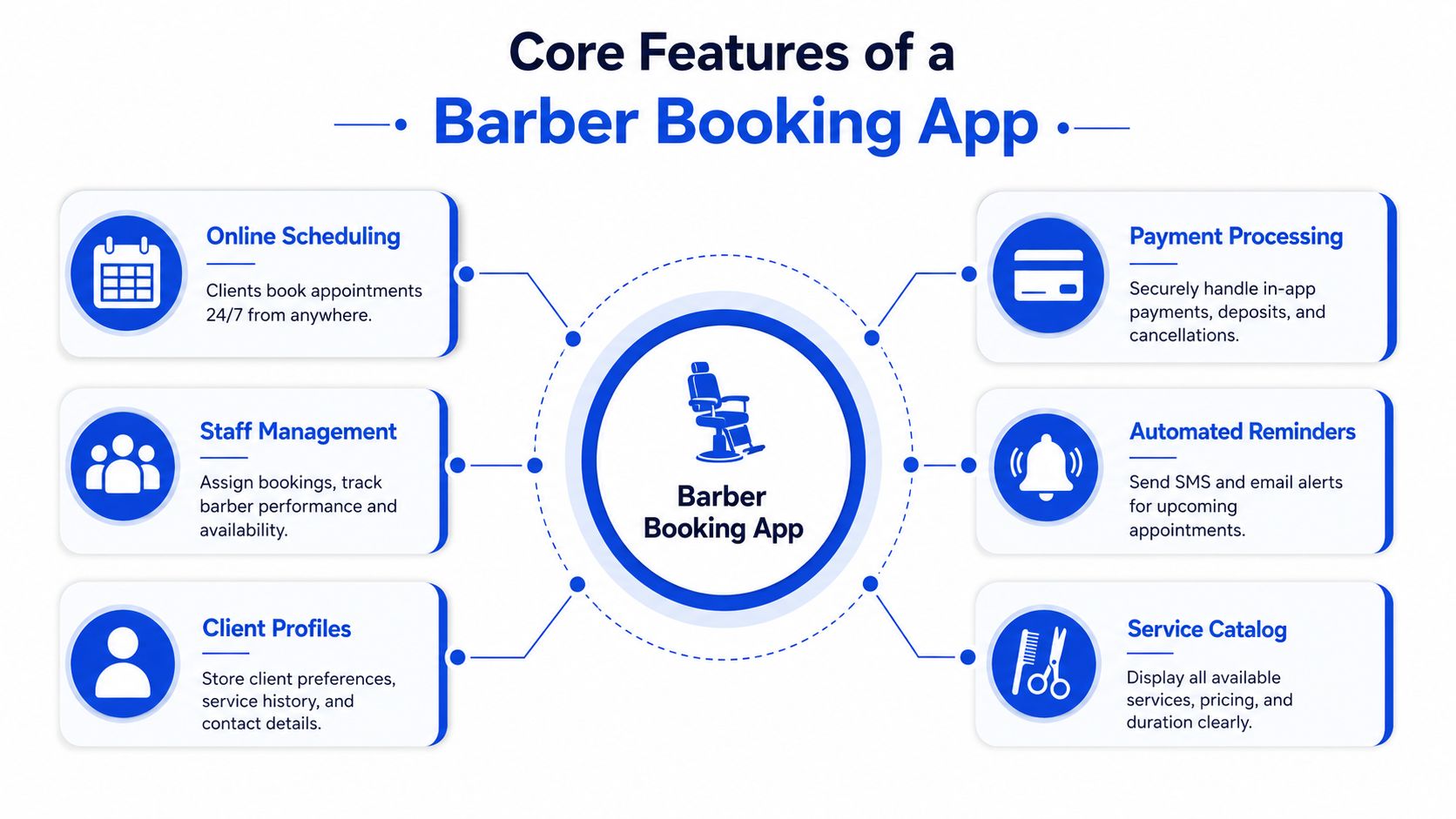
The easiest way to think about a barber booking app is this. It's a digital receptionist that works when you're cutting, sleeping, or off for the day. If the app is built properly, it doesn't just take bookings. It protects your calendar, handles routine client communication, and keeps availability accurate.
Your booking page is the new front desk
Your public booking page does the work that used to happen through messages. Clients should be able to choose the service, pick a time, see the price, and confirm without asking you basic questions.
A decent setup includes the essentials:
- Service list: Clear names, proper timings, and pricing that matches what you charge.
- Availability display: Clients only see bookable slots, not times you might be able to do if they ask nicely.
- Payment and policy handling: Deposits, cancellation terms, and confirmation all happen within the same flow.
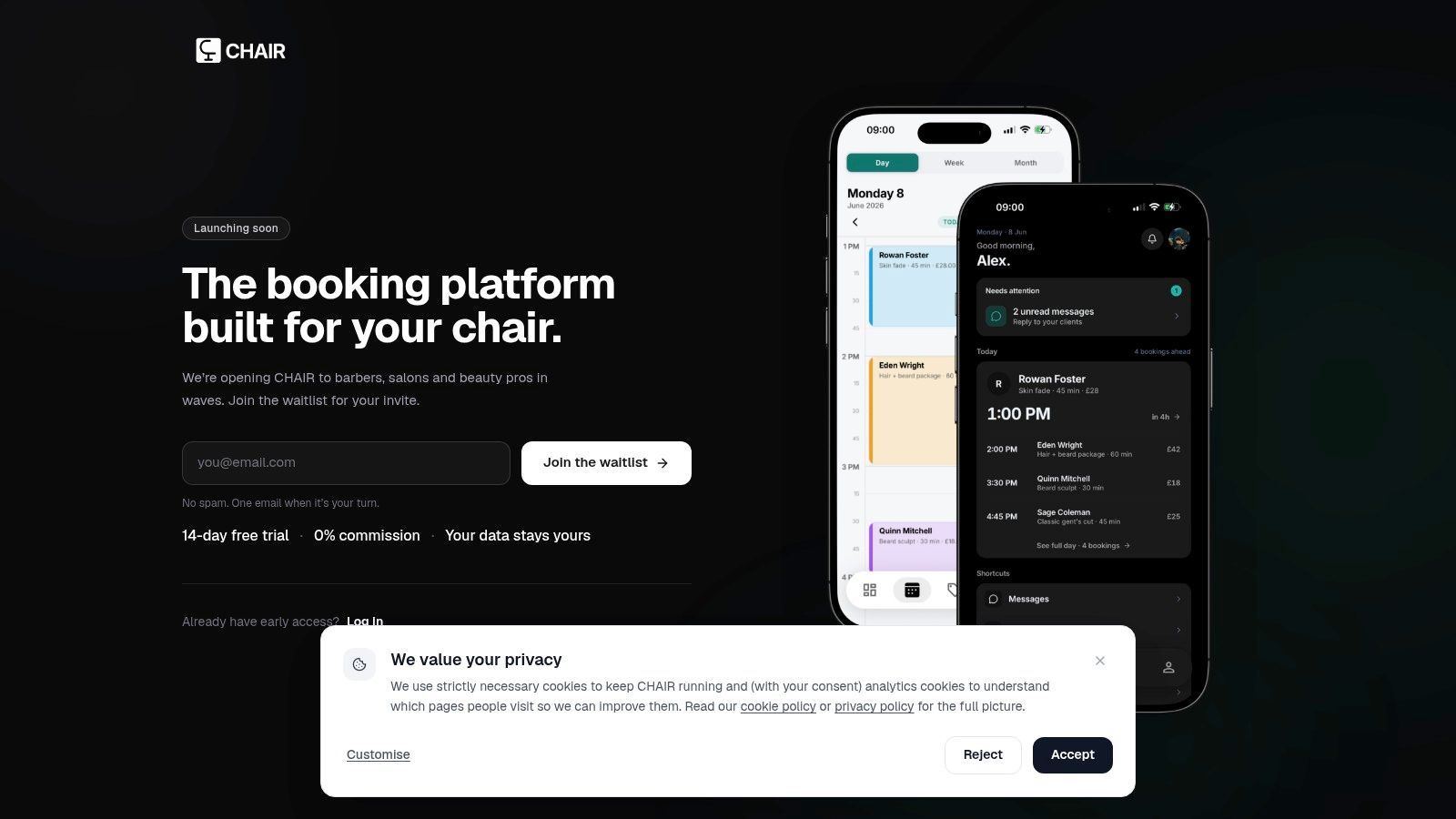
If you want to see what that looks like in practice, CHAIR's booking platform features for beauty and barber professionals show the sort of setup many UK-based pros now expect.
The calendar has to think in real time
The smart calendar is where good apps separate themselves from average ones. A basic diary stores bookings. A strong app actively prevents mistakes.
In UK barber marketplace builds, a two-sided platform that combines real-time availability with location-based search is important for reducing reliance on walk-ins, and the technical side has to include conflict checks and live updates to prevent double-booking, as explained in LowCode Agency's guide to building a barber marketplace.
That matters because a lot of booking problems don't come from clients. They come from weak logic behind the diary.
| Function | Why it matters in a barbershop |
|---|---|
| Real-time availability | Stops clients seeing slots that have already gone |
| Conflict checks | Prevents overlapping services and staff clashes |
| Rescheduling tools | Lets clients move appointments without messaging you |
| Location-based discovery | Helps nearby clients find bookable barbers |
Marketplace versus direct booking
Some apps are direct booking tools. Others add a marketplace layer where clients can discover professionals by area or service. That can help fill gaps, especially if you're building a client base, but it changes the economics. Discovery isn't free just because the app says it is. Often, the cost shows up later through commission or reduced control.
Practical rule: Don't judge a barber booking app by the homepage. Judge it by what happens when a client books, reschedules, pays, and comes back.
The Business Benefits of Automated Booking
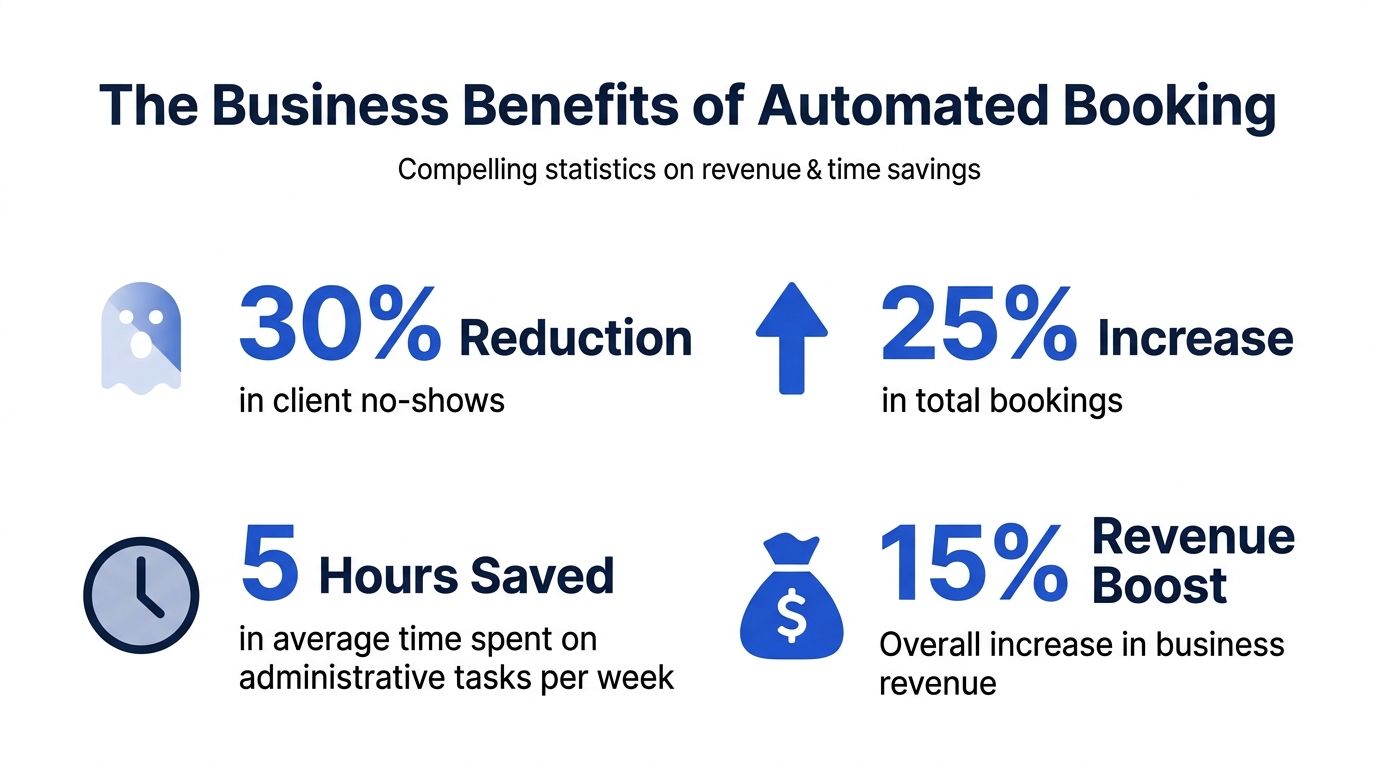
A barber booking app isn't just an admin tool. In day-to-day shop terms, it protects booked time, makes payment rules easier to enforce, and cuts the amount of unpaid effort spent organising the diary.
No-shows stop being random damage
No-shows feel like part of the trade until you put structure around them. Then you realise a lot of them were preventable.
According to Setora's overview of barbershop booking software, automated SMS reminders sent 24 hours before the appointment, combined with optional security deposits at booking, reduce barber appointment no-shows by an average of 71% in the UK. That's one of the clearest practical arguments for automation. The system follows up consistently, and the deposit gives the client a reason to commit.
For barbers who want a tighter payment flow, booking systems with payment built into the process are worth looking at because the reminder and deposit setup works best when it's part of the booking journey, not added later with manual links.
Admin drops and the client journey improves
The biggest operational change is often less visible than the no-show reduction. It's the drop in tiny interruptions. Clients book without waiting for replies. Confirmations go out automatically. Reschedules don't always need your involvement.
That creates a better experience on both sides.
- Clients get certainty: They can see what's free and lock it in immediately.
- You keep control: Policies are applied consistently instead of negotiated in messages.
- The day feels cleaner: Fewer interruptions at the chair, fewer missed calls, fewer loose ends at closing time.
A professional booking page also changes how new clients judge your business. Even before they sit in the chair, they can see whether the operation feels organised. If the booking process is clunky, trust drops before the haircut starts.
The investment question
Barbers sometimes look at subscription cost and hesitate. Fair enough. But the better question is what manual booking is already costing in lost slots, admin time, and preventable no-shows.
If the app protects booked time and removes friction for regulars, it isn't just a software bill. It's part of how the shop keeps revenue predictable.
That's especially true when your diary starts filling up. At that point, one missed appointment doesn't just mean a gap. It can mean turning away someone else who would have taken the slot.
How to Choose the Right Barber Booking App
The wrong way to choose a barber booking app is to compare feature lists and stop there. Most platforms now offer the basics. Online booking, reminders, calendar sync, and payments are common enough. The bigger question is how the pricing model behaves when your bookings increase.
The pricing model matters more than the feature list
This is the part many barbers overlook. Marketplace apps often sell visibility and convenience first, then recover their margin through commission or layered transaction costs.
A good reality check comes from Zenoti's UK barbershop software comparison, which highlights that for a UK barber generating £3,000 monthly revenue, a 10% commission model costs £300 per month, equivalent to 20+ flat-rate subscriptions. That's the hidden maths behind “free” or low-entry marketplace platforms. The system feels cheap while you're small, then starts taking a meaningful slice once the chair is busy.
Here's the comparison in plain terms:
| Metric | Commission-Based Model (e.g., 10%) | Flat-Fee Model (e.g., CHAIR Professional) |
|---|---|---|
| Monthly software cost shape | Rises with each booking | Stays fixed each month |
| Cost predictability | Harder to forecast in busy periods | Easy to budget |
| Incentive of the platform | Benefits when booking volume rises | Benefits by keeping subscription value clear |
| Margin impact as you scale | Can become expensive quickly | Easier to protect net revenue |
| Best fit | Testing discovery or early-stage demand | Established direct-booking businesses |
If you depend heavily on marketplace discovery, commission may still be a trade-off you accept. But it should be a conscious choice, not something buried behind “more visibility”.
What to check before you commit
Don't sign up until you've answered these points clearly.
- Pricing structure: Is the platform charging a flat fee, taking commission, or doing both in different parts of the booking journey?
- Client ownership: Can you export client data if you leave, or are you effectively renting access to your own customer list?
- Payment flow: Does money go straight to your own account, or does the platform hold funds first?
- Scalability: If you add another barber or grow into a multi-chair setup, does the system still make sense?
One practical architecture point matters here. Stripe-powered direct payout setups send funds to the professional's own bank account and keep costs tied to Stripe's published rates, rather than routing money through a platform-held ledger with extra markup. That's cleaner for transparency and usually cleaner for control.
Marketplace visibility is not automatically profit
A lot of comparison pages treat marketplace discovery as an obvious win. Sometimes it is. But discovery only helps if the client value outweighs the fees and the loss of control that can come with it.
The key trade-off is simple. Do you want a system that helps you be found at a cost per booking, or a system that helps you own the relationship once clients already know where to book? For many independent UK barbers, that answer changes as the diary matures.
Advanced Features for Scaling Your Barber Business
A solo barber needs booking, reminders, and reliable payments. A growing shop needs more than that. Once you've got multiple chairs, different working patterns, and a shared client base, the app stops being a convenience and starts becoming your operating system.
When one chair becomes a team operation
The first thing that breaks in a growing shop is usually visibility. Who's free. Who's running late. Which barber is off next Thursday. Which client usually books skin fades with one person but beard work with another.
That's where multi-calendar management matters. You need one place to see staff schedules, time off, and live availability without chasing updates in the group chat.
Useful team features usually include:
- Shared calendars: Owners and managers can view the full shop at once.
- Roles and permissions: Staff can manage their own diary without changing business-wide settings.
- Performance views: You can see booking patterns and service demand by barber.
- Shared client records: The shop retains context even when clients move between team members.
Client profiles become more valuable as the team grows. Visit history, private notes, and service preferences help keep the experience consistent. If a regular's usual barber is off, another barber can still see what they normally book and how they like it handled.
Growth features that actually earn their keep
Not every advanced feature is worth paying for. Some are fluff. The ones that matter tend to do one of three jobs. Fill gaps, increase spend, or reduce admin at shop level.
A waitlist is a good example. When someone cancels at short notice, the slot doesn't have to sit dead. A proper waitlist can offer that space to the next client without staff manually messaging round.
Product sales during booking can also work well when used lightly. If you retail beard oil, styling product, or aftercare, the booking flow gives you another point where clients can add it without a hard sell at the counter.
Here's a walkthrough that shows the kind of platform flow many shops now expect:
The right system should feel small when you're solo and structured when you're busy. If it only works well at one stage, you'll outgrow it.
Your Implementation and Migration Checklist
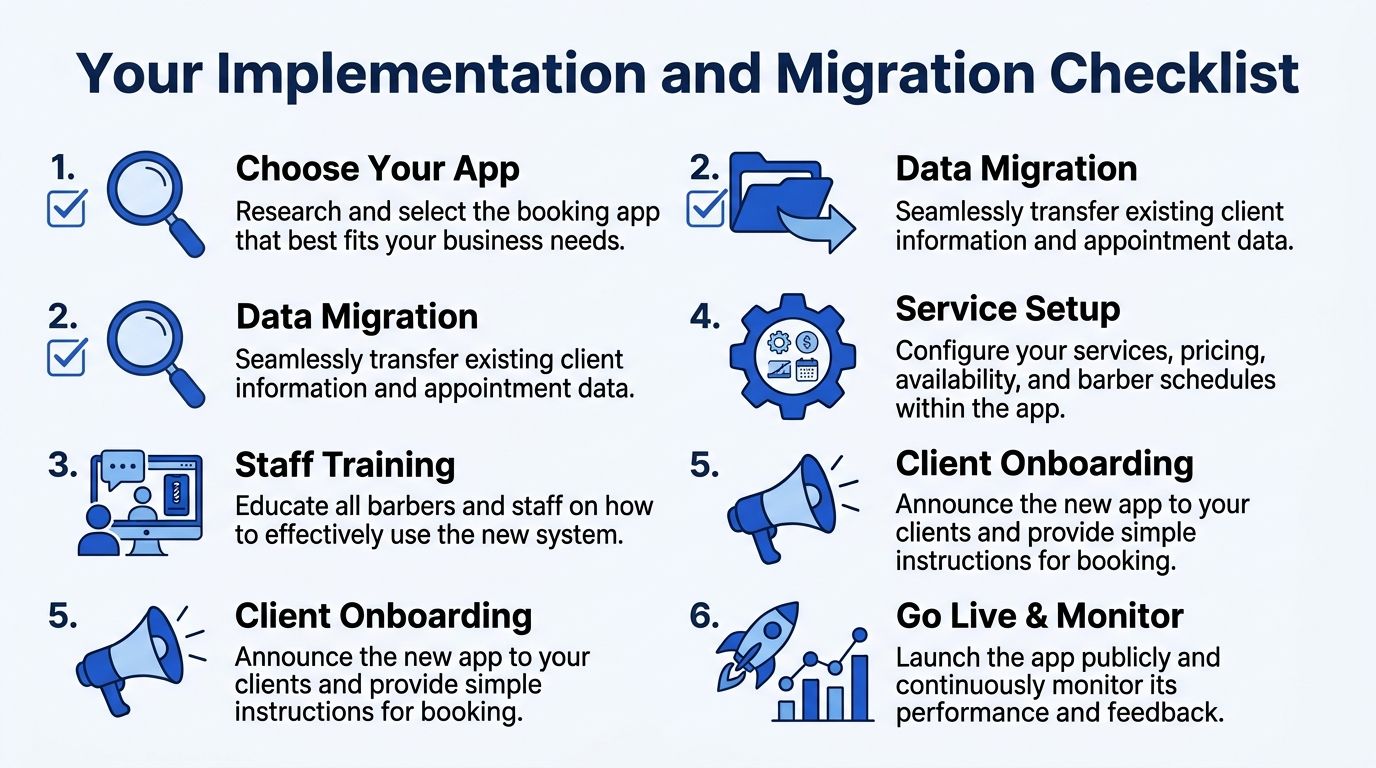
Switching from a paper diary or a patchy old app feels bigger than it is. The cleanest migrations happen when you treat the move like a shop setup job. Get the foundations right first, then tell clients where to book.
Set the system up properly before launch
Don't start by posting the link. Start by building a booking flow that reflects how your shop really runs.
- Choose the platform carefully: Pick the app based on pricing model, payment flow, and whether it suits a solo barber or a team.
- Add services properly: Keep names simple. Set accurate timings. Don't leave vague service options that confuse clients.
- Set your working hours and time off: The diary is only useful if availability is honest.
- Configure deposits and cancellation rules: These need to match the way you want the business to run.
- Connect payouts: Make sure payments land where they should before going live.
If you're moving from another platform, a structured migration path helps. For example, CHAIR's migration support for Fresha users reflects the sort of process barbers should look for when changing systems: data transfer help, setup guidance, and less manual rebuilding.
Roll it out without confusing clients
Once the system is ready, then you announce it. The mistake some barbers make is launching softly and assuming clients will figure it out. They won't, at least not all of them.
Use a clear rollout:
- Update your Instagram bio and WhatsApp booking message: One main link. No clutter.
- Tell regulars directly: A short message works better than a long explanation.
- Pin the process in stories or highlights: Make it obvious where people book now.
- Brief the team: Everyone should use the same language when clients call or walk in asking how to book.
A few regulars will still message out of habit. That's normal. The key is to redirect them consistently. If you keep making exceptions, the old system never ends.
Keep the first month tight
Watch what clients struggle with in the first few weeks. If people are picking the wrong service, rename it. If they're booking too close together, adjust durations. If deposits are causing confusion, rewrite the wording on the booking page.
Small tweaks early on save a lot of friction later. The booking app doesn't need to be perfect on day one. It needs to be clear enough that clients can use it without needing you to explain every step.
Frequently Asked Questions from UK Barbers
Can I set deposits by service
You should be able to. If an app only offers a general deposit rule or forces you to send payment links manually, that's a weak setup for a busy shop. The better systems let you apply booking policies by service, so a standard trim can be treated differently from a longer appointment.
That matters because the technical friction is often what kills adoption. If taking a deposit means extra manual steps, clients are more likely to drop out before completing the booking. For UK barbers, the smoother option is direct integration with the payment flow so the deposit is collected automatically when the appointment is made.
What happens to my client list if I leave
This is one of the most important questions and one of the least discussed. Before joining any platform, check whether you can export client data, booking history, and contact details in a usable format.
If the platform controls the client relationship too tightly, you can end up in a position where leaving means rebuilding from scratch. That's a bad dependency for an independent barber. Your client base should remain your business asset, not a platform asset.
What should I expect to pay in the UK
The UK market is growing, but pricing varies a lot. According to Market.us research on the UK barber booking apps market, the sector is seeing 15.4% CAGR, and current pricing examples include Booksy Biz from £40 per month plus VAT, Nearcut from £27.50 per month plus VAT, and flat-fee options such as CHAIR Professional at £12.99 per month.
That range tells you why headline pricing can be misleading. A barber booking app isn't just a monthly fee comparison. You need to look at whether the platform also takes commission, whether payment processing includes added markup, and whether the price still makes sense once your bookings are steady.
Are there hidden fees on top of card processing
Sometimes yes, which is why this needs checking before you commit. If the platform uses direct Stripe payouts to your own account, costs are generally easier to follow because they're tied to Stripe's published rates. If the platform sits in the middle of the money flow, you need to ask much harder questions about markup, payout timing, and who controls the transaction relationship.
Ask one blunt question before signing up. “When a client pays, whose system owns that payment relationship, mine or yours?”
A barber booking app should make the business simpler. If pricing, payouts, or data ownership feel muddy during the trial, they usually feel worse once your whole diary is inside the system.
If you want a UK-focused option that combines online booking, reminders, payments, client management, marketplace discovery, and direct Stripe payouts on a flat monthly fee, take a look at CHAIR. It's built for bookable professionals who want online booking without commission-based pricing eating into each appointment.